Showing posts with label prayer. Show all posts

Saturday, April 25, 2020

Positive results of our response to the Corona virus

Although the COVID bug is nothing to sneeze at, it is becoming clearer and clearer that it is not as deadly as first predicted.  This video from Youtube is the first indicator that I saw, which reveals that the bug is far more prevalent in society than we knew and that it has a similar mortality as the common flu:


Thank God for that!  I mean, if you listen to the hot mic incident, it is stated that the mortality is between .1 and .3 percent.  Which makes this disease a mere variation of the flu.  Not the deadly plague that was originally prophesied.

So, we can breathe more easily.  With all due respect to all those who lost loved ones during this time, there were some positive aspects of our human response to this emergency.

THE FEAR OF GOD

As Scripture says, "the fear of God is the beginning of wisdom".  And many people began to think of their eternal resting place during this pandemic.  Their personal mortality and frailty was on full display and as a result, many turned to God for help.  Some people whom I've never heard to invoke God before, suddenly were praying.  I consider this a good thing.  I pray that the grace of God remains with them after the fear for their lives, is gone.  Hopefully, we will again see packed houses when we are permitted to return to the Mass.

PRAYER AT HOME

Relatedly, I have heard that people are praying, lighting blessed candles and using holy water and oil, at home.  I pray that these customs persist long after the pandemic is relegated to the footnotes of history. 

HOMESCHOOLING

People have been forced to homeschool their children.  And, although there are some videos humourously panning the practice:


I have heard from a friend who spoke to a friend about another friend whose family is thoroughly enjoying their unexpected experience.  Apparently, they are using the Public School curriculum because their daughter is thoroughly familiar with it.  And, she has learned to give herself more vacation days by getting up to two weeks ahead and then, relaxing until the curriculum catches up!  Brilliant kid!

EATING TOGETHER

One of the sad facts of chasing the American dream, is that too many people did it at the expense of family life.  I don't know how many times my co-workers lamented to me that they never ate dinner with their family.  Everyone was too busy.

But now, many have rediscovered this beautiful tradition.  We homeschooled our kids and we've never ceased to eat together even though they are now grown up.  But to so many of my co-workers, this has been a surprise blessing.

WATCHING MOVIES TOGETHER

Again, something which comes naturally to homeschoolers.  But something which my co-workers said they seldom did.  Now that they are forced to be together at home, they are doing this more frequently, as well.  And thoroughly enjoying it.

SAVINGS

This is a personal thing.  By the grace of God, I'm still working.  Although my children have lost their jobs.  However, we are not adversely affected because we have suddenly stopped buying all the unnecessary things that we used to buy.  No more eating out at restaurants, uh, because they're closed.  No more going to the movies, because they're shut down.  No more shopping sprees because unnecessary trips outside the home, are discouraged.

So, actually my wife and I are saving more money.  And my kids are wondering why they have to return to work.  Because I said so!  That's why!

It seems to me, that God is turning this evil pandemic, into a blessing in disguise.

May God bless you and may you and your family remain safe.

Saturday, September 29, 2018

How then shall they call on Him?


Lutero said:
Not one RC has ever addressed this verse in truth.
You can NEVER get to the Father unless you go through Jesus NO other SALVATION plan was offered by God NONE.
So if Mary or a pope is needed or even the RCC for that matter Jesus LIED !
Jesus said no man comes to the Father but by Him NOT and add and add and add whatever you want. 
Jhn 14:6 Jesus saith unto him, I am the way, the truth, and the life: no man cometh unto the Father, but by me. 


Have you not read in Scripture, this verse?
Romans 10:14
How then shall they call on him in whom they have not believed? and how shall they believe in him of whom they have not heard? and how shall they hear without a preacher?

We are all supposed to point our fellow man to Christ. 

As the Scripture also says elsewhere:
1 Timothy 4:16
Take heed unto thyself, and unto the doctrine; continue in them: for in doing this thou shalt both save thyself, and them that hear thee.

Sincerely,

De Maria

Thursday, September 1, 2016

The difference between prayer, worship and Liturgy

There is very little difference between the words "prayer" and "worship". But they do not mean exactly the same thing.
The basic difference in this day and age, is that worship is only directed to God but prayer can be directed to either God or the Saints.
So, what is prayer?
Let us begin by studying about the word, "prayer", what it means today and what it used to mean long ago.
To pray is to communicate with God or the Saints, our faith, our love, and our wants. So, we can say that prayer is communication.
Prayer today is basically considered an act of faith in God. An act of worship. A Catholic and Protestant can agree upon this. But, for some strange reason, Protestants tend to give a word one meaning and deny the fact that most words have multiple meanings. Therefore they deny the fact that prayer has another very important definition, and it is still seen in books which are written in the ancient language. One of those is the King James Bible:
Luke 14:18
And they all with one consent began to make excuse. The first said unto him, I have bought a piece of ground, and I must needs go and see it: I pray thee have me excused.
Notice that in this verse, the word "pray" is used in the sense of petition, beseeching or begging. And this is the other sense which the Church recognizes in the word, "prayer".
Therefore, today, there are at least three religious senses to the word "pray".
1. We can pray to God in the sense of praise, worship or adoration.
2. We can pray to God in the sense of petition or request.
3. This one requires a bit of further explanation. As we have seen, a prayer or request can be addressed to anyone, God or man. In the Old Testament, prayer was addressed to God and man. But prayer was not addressed to the dead, faithful or not.
However, there is a New Dispensation in the New Testament. Jesus has shown us that those who die in the state of grace are counted amongst the living:
John 11:26
And whosoever liveth and believeth in me shall never die….
To prove this, Jesus spoke to Moses and Elijah on the top of the mountain:
Matthew 17
King James Version (KJV)
1 And after six days Jesus taketh Peter, James, and John his brother, and bringeth them up into an high mountain apart, 2 And was transfigured before them: and his face did shine as the sun, and his raiment was white as the light. 3 And, behold, there appeared unto them Moses and Elias talking with him.
4 Then answered Peter, and said unto Jesus, Lord, it is good for us to be here: if thou wilt, let us make here three tabernacles; one for thee, and one for Moses, and one for Elias.
And Scripture tells us that all the Baptized are now on top of that mountain with the Saints:
Hebrews 12:21-24
King James Version (KJV)
21 And so terrible was the sight, that Moses said, I exceedingly fear and quake:) 22 But ye are come unto mount Sion, and unto the city of the living God, the heavenly Jerusalem, and to an innumerable company of angels, 23 To the general assembly and church of the firstborn, which are written in heaven, and to God the Judge of all, and to the spirits of just men made perfect, 24 And to Jesus the mediator of the new covenant, and to the blood of sprinkling, that speaketh better things than that of Abel.
And so, in the New Testament era, we can make prayers of praise and petition to the Saints who went before us to the heavenly Kingdom.
We do not worship them, but we do acknowledge the love of God towards them as we do towards all our fellow men.
So what is worship?
In our explanation of the word "prayer", we used the word "worship" a couple of times already. Like prayer, worship has a meaning which is universally accepted and another which is no longer used frequently, an archaic sense.
To worship is to acknowledge and praise God's authority and power over us. In today's world, worship is only directed to God.
However, worship was not always exclusively directed to God. We can see this in the ancient text of the King James Bible where Joshua worships the angel:
Joshua 5:14
And he said, Nay; but as captain of the host of the Lord am I now come. And Joshua fell on his face to the earth, and did worship, and said unto him, What saith my Lord unto his servant?
However, Joshua was merely showing reverence for an authoritative figure. In older times, in America and Britain, Kings and Judges were referred to as "your worship". Because of the recognition of their authority and power.
archaic honor given to someone in recognition of their merit.
[as title] (His/Your Worship) chiefly British used in addressing or referring to an important or high-ranking person, especially a magistrate or mayor:
we were soon joined by His Worship the Mayor
Today, we no longer use the word, worship, to describe the honor we give anyone but God. Instead we use the words reverence, honor and veneration.
I'm sure you've noticed that prayer and worship have much in common. They are almost synonymous when it comes to prayer directed to God. Prayer directed to God is the worship of God. Because any prayer directed to God acknowledges and praises His power and authority over our lives.
Indirectly, prayer directed to the Saints is the worship of God because in doing so, we also acknowledge the great thing which God has done through that Saint. Much like when we praise a painting. When we praise a painting we indirectly praise the painter who made the painting. When we praise a Saint and acknowledge the holiness of the Saint, we indirectly acknowledge the God who made the Saint.
Liturgy
Liturgy is the work of man. It is frequently called the Mass. It is the public gathering of the people of God to acknowledge God's authority and power over our lives. Therefore, worship is the main purpose of the Liturgy. However, the Liturgy includes every form of prayer we can offer to God. Praise, glory, honor, thanksgiving, petition, sacrifice, etc. It also includes rites and rituals which were commanded by God that we should do in remembrance of His Son.
Many people think that private prayer and worship are all that is necessary and that Liturgy is optional. But that is far wrong. It is clearly explained in Scripture that God takes great offense with those who do not honor Him in the Liturgy on the appointed day:
Hebrews 10:25-31
King James Version (KJV)
25 Not forsaking the assembling of ourselves together, as the manner of some is; but exhorting one another: and so much the more, as ye see the day approaching.
26 For if we sin wilfully after that we have received the knowledge of the truth, there remaineth no more sacrifice for sins,
27 But a certain fearful looking for of judgment and fiery indignation, which shall devour the adversaries.
28 He that despised Moses' law died without mercy under two or three witnesses:
29 Of how much sorer punishment, suppose ye, shall he be thought worthy, who hath trodden under foot the Son of God, and hath counted the blood of the covenant, wherewith he was sanctified, an unholy thing, and hath done despite unto the Spirit of grace?
30 For we know him that hath said, Vengeance belongeth unto me, I will recompense, saith the Lord. And again, The Lord shall judge his people.
31 It is a fearful thing to fall into the hands of the living God.
Heavenly Liturgy
What is the heavenly Liturgy? Scripture reveals that the saints and angels in heaven are always praying to God. Therefore, we are taught that all our prayers on earth are linked to the prayers of the angels in heaven.
This is especially true in the Mass. Where we believe that we, humans on earth, join the whole cohort of heaven in proclaiming God's glory. This is why the Church recommends that we pray continually in order that we may always be united to the Mass and to the heavenly Liturgy of the saints and angels.
With that in mind, through the centuries the Church has given us many tools in order to encourage us to pray continually.
and many, many other devotions are taught by and supported by the Church. We should take advantage of these and to the yearnings in our heart in order to always remain united to God, wherever we may be.
I hope this helps. Let me know if there is anything which needs clarifying. See also New Dispensation and Prayer for the dead.

Monday, August 1, 2016

Election Novena 2016

My family and I just started praying a Novena to St. Jude that God may provide us with a Godly person to lead our country.  I hope that all of you are praying for the same cause.  Especially considering the top 2 characters which have been nominated this year.

Novena To St. Jude 

Most holy Apostle, St. Jude, faithful servant and friend of Jesus,  the Church honors and invokes you universally, as the patron of difficult  cases, of things almost despaired of, Pray for me, I am so helpless and alone.

Intercede with God for me that He bring visible and speedy help where help is  almost despaired of. Come to my assistance in this great need that I may receive  the consolation and help of heaven in all my necessities, tribulations, and  sufferings, particularly - that God may grant us Godly men for whom we may vote who will uphold His will.

- and that I may praise  God with you and all the saints forever. I promise, O Blessed St. Jude, to be  ever mindful of this great favor granted me by God and to always honor you as  my special and powerful patron, and to gratefully encourage devotion to you.
Amen

PRAYER

May the Most Sacred Heart of Jesus be adored, and loved in all the  tabernacles until the end of time. Amen.

May the most Sacred Heart of Jesus be praised and glorified now and forever. Amen

St. Jude pray for us and hear our prayers. Amen.

Blessed be the Sacred Heart of Jesus
Blessed be the Immaculate Heart of Mary
Blessed be St. Jude Thaddeus, in all the world and for all Eternity.
(say this prayer, followed by the Our Father and the Hail Mary)


Saturday, October 31, 2015

Praying to dead saints

Just my two cents. The Bible does not say anything about praying to “dead” saints.

The Bible simply commands the Saints in Christ to pray for “all” (1 Timothy 2:1). We don’t cease to become members of the Body of Christ when we die. Therefore, we don’t cease to pray when we die. If anything, our prayer becomes more perfect as we get closer to the source of our spiritual life (2 Corinthians 5:8).
The New Testament is a new dispensation in Christ. This is clearly expressed in the book of Hebrews. Where the Old Testament is described, it says:
Heb 12:18 For ye are not come unto the mount that might be touched, and that burned with fire, nor unto blackness, and darkness, and tempest, 19 And the sound of a trumpet, and the voice of words; which voice they that heard intreated that the word should not be spoken to them any more: 20 (For they could not endure that which was commanded, And if so much as a beast touch the mountain, it shall be stoned, or thrust through with a dart: 21 And so terrible was the sight, that Moses said, I exceedingly fear and quake:)
But the New Covenant in the name of Jesus Christ is totally different. We are living amongst our brethren. How can it be that we are not permitted to communicate with those amongst whom we live?
Heb 12:22 But ye are come unto mount Sion, and unto the city of the living God, the heavenly Jerusalem, and to an innumerable company of angels, 23 To the general assembly and church of the firstborn, which are written in heaven, and to God the Judge of all, and to the spirits of just men made perfect, 24 And to Jesus the mediator of the new covenant, and to the blood of sprinkling, that speaketh better things than that of Abel.
Christ is our example. And it is He who first portrayed the new dispensation of the communion of saints, when, still in the flesh, he climbed the Mountain of Tabor and spoke freely with Moses and Elijah in the company of Peter, James and John (Matthew 17:1-3).
Therefore, although the Bible does not give an explicit command to pray to dead saints. The New Testament teaches, by example and implication, that we who are born again in Christ are living in and amongst the saints upon Mount Sion. And since we are living amongst them, we are free to communicate with them.

Wednesday, August 19, 2015

The difference between prayer, worship and Liturgy

There is very little difference between the words "prayer" and "worship". But they do not mean exactly the same thing.
The basic difference in this day and age, is that worship is only directed to God but prayer can be directed to either God or the Saints.
So, what is prayer?...(Read more)

Friday, February 13, 2015

We call it reverence when we address the Angels and Saints.


Cal:
Who are our prayers to be offered to in heaven?
Apparently you didn't read my response. It is obvious by your question that you still consider prayer equivalent to adoration.

Our prayers of adoration are only offered to God.
Our prayers (petitions) for intercession are offered to the Saints in heaven and to our fellow Christians here on earth.

That was the question.
Which in the parlance is called a "loaded" question. A question which is loaded with presuppositions and thus can't be answered until the presuppositions are addressed. An good example of this is, "have you ever stopped beating your husband?" Obviously, "yes" is the wrong answer since it leaves the impression you were beating your husband. "No", is equally wrong since it leaves the impression you are still beating your husband. The right answer would be, "I have never beat my husband, unnecessarily." 

The bible only says God.
The Bible says that God alone is adored.

Bible doesn't say Mary or saints.
The Bible gives plenty of examples, which I provided in my previous message. Please read it.

Live people are obviously not in heaven.
But Abraham and the angels are in heaven.

Nothing in that scripture speaks of prayer.
It takes spiritual discernment. Without meaning any disrespect, is something which Protestants lack because you are taught to read the letter of the Word and not the Spirit:

2 Corinthians 3:6

King James Version (KJV)

6 Who also hath made us able ministers of the new testament; not of the letter, but of the spirit: for the letter killeth, but the spirit giveth life.

The captain of the host of the Lord IS the Lord.
No. It is an Angel. Specifically, the angel Michael.

Who was this "captain of the host of the LORD"? A "host" in the Bible is an unseen army, invisible to the human eye that surrounds the throne of God. It is an angelic host. Cf. 2 Kings 6:17ff; Psalm 148:2; 103:21. Christ said twelve legions of angels were ready to defend Him.
But Michael commands the Angels:
Revelation 12:7

King James Version (KJV)

7 And there was war in heaven: Michael and his angels fought against the dragon; and the dragon fought and his angels,

This is typical though. Why do you deny the plain word of Scripture? Michael is the Captain of the angels. Nowhere has anyone ever said that Joshua saw God. Yet you are now claiming that Joshua saw God in order to justify your errors.


Joshua immediately recognized the supernatural character of this visitor. Joshua was in the presence of God."And Joshua fell on his face to the earth, and bowed down, and said to him, 'What has my lord to say to his servant?'" (v. 14b). Joshua fell on his face and worshiped. The worship paid to this messenger of the LORD is directed to Yahweh Himself. Who is this person? It is sin to worship angels and men (Exodus 20; Deuteronomy 5-8; Revelation 19:10; 22:8, 9). The total impact of the context of the passage indicates that a superhuman person is present. He is in the presence of Deity. The commander of the army of the LORD is God Himself. Yahweh has come to lead and fight for His people. All distinctions between the messenger of the covenant and the LORD Himself evaporate in the context.
Verse fifteen removes any doubt as to who this "captain of the army of Yahweh" was. "The captain of the Lord’s host said to Joshua, 'Remove your sandals from your feet, for the place where you are standing is holy.' And Joshua did so." In the Bible only things, places and people can be called holy because they are set aside for God or claimed by Him.
That doesn't mean that this Commander is God. All that means is that they were standing in a Holy Place. 

I want you to note the difference between what you and I are doing here. I am interpreting the Scripture according to the Scripture.

Joshua 5:14 identifies a commander of the Lord's army.
Rev 12:7 reveals that the commander of the Lord's angels is Michael.

But you pit the explanation of men against the revealed Truth of Scripture. So be it. Let everyone take note.

There was no prayer going on there
But there was a form of worship which we call reverence and we address to the Angels and Saints.

Take that up with God. He did not define prayer. He said PRAYER. If God wanted to define different methods of prayer, I am quite sure He would have been able to do it, don't you think?
Protestants always say something similar for many things. God ought to have and God would have. But we have revealed Scripture and you should be satisfied with it. If God did not define further that doesn't mean He forbid us defining further.

I am quite sure God has a dictionary. However He said PRAYER...
Yeah. He said this is how you ought to pray to God. He didn't say this is how you ought to pray to the Saints nor did He forbid praying to the Saints.

This is how you PRAY....that is what Jesus said.
But He did not forbid praying to the Saints.

Mary and Saints are not mentioned ANYWHERE in the bible as people in heaven to direct prayers to.
I've already addressed that objection in my response. Mary is frequently mentioned and Jesus Himself as her Son, requested many things of her. As for the Saints, Jesus is our example on the Mountain of Transfiguration where He communicated with Moses and Elijah.

Sincerely,

De Maria

Saturday, December 6, 2014

Worship is not always adoration


 A Catholic friend told me once a long time ago that we don't pray to saints, we ask saints to pray for us, which I totally get. It's just that sometimes it sounds like people aren't making that distinction.


I think most of the confusion, even amongst Catholics is with the word, "pray".

1st, pray is not always worship.

In the ancient sense, pray, means a request.  Example:  I pray thee, pass the salt.  Therefore, when we pray to the Saints, we are asking them for their intercession.  However, there is also a confusion as to the idea of what constitutes worship or adoration.

Next.  Worship in the ancient sense, is not always adoration.

For this, an example from Scripture is in order:
Joshua 5:14
King James Version (KJV)
14 And he said, Nay; but as captain of the host of the Lord am I now come. And Joshua fell on his face to the earth, and did worship, and said unto him, What saith my Lord unto his servant?

Joshua, here, worshipped the Angel Michael, whom we know from Scripture is the Captain of the host of angels of God:

Revelation 12:7
And there was war in heaven: Michael and his angels fought against the dragon; and the dragon fought and his angels,

In addition, we have examples of men calling judges, "Your worship".  Therefore, worship due to angels and saints is a form of reverence which is due to anyone worthy of it.  Beginning with our own parents.  It is simply recognition that we recognize the position of those whom God has exalted.

Also, notice above that Joshua fell on his face before the angel.

We also may kneel and perform other acts of obeisance before any Saint of the Lord.  It is an expression of humility.

Finally, adoration is the highest form of worship.

It is reserved for God alone.  We do not adore the Saints or the Angels.  We adore the Holy Trinity.

Sincerely,

De Maria

Tuesday, November 25, 2014

What to expect your first time in a Catholic Church


You've never been to a Catholic Church and you don't know what to do?

First of all, what day is it?  Is it Sunday?  Yes?  Then you'll find a large crowd of people entering a building which is adorned with statues of Saints and a Cross with Jesus Christ crucified.

But, what if it isn't Sunday?  Then skip down to the bottom.

If its Sunday, follow them in.  If this is a ROMAN Catholic Church, usually you'll see a sign with the Church name and the "mass" times.  If you don't see a sign, ask one of the people that is entering the building.  Once you're sure you're in a ROMAN Catholic Church, you can follow the old time adage, "do as the Romans".

What you will see:

Probably the first thing you'll see, outside, is statuary.  Statues of the Saints and mostly of Mary and Jesus.  Also, very frequently, images of Jesus, crucified.

Then, as you follow the people through the front doors, you'll see them dip their fingers in water and touch their foreheads with it.  Then they'll bring their hand down to their chest and then across to their left shoulder and then to their right.

The water might be in little bowls on either side of the door.  Or it might be in big bowls or fonts in front of the door or in the vicinity of the entrance.  People will be making their way to the water in order to perform this ritual.

The water is Holy Water which has been sanctified by the priest for the purpose of bringing down Christ's blessings upon all who touch it.

The movement of their hands from head to chest and shoulders is a prayer called the "Sign of the Cross".

When we touch the water to our heads and make the Sign of the Cross we pray to bring down Christ's blessings in the name of the Father (head), Son (chest) and the Holy Spirit (left and right shoulders).  It also reminds us of our Baptism (Matt 28:29).

Then, you should notice that people stop talking.  Unlike a Protestant gathering, in a Catholic Church, we maintain reverence for the presence of God.

Then, people will go to a pew and kneel on one knee and stand back up.  That is called a "genuflect".  It is our showing that we humble ourselves before the Lord.  Remember the Scripture, "every knee will bend".  That's what we do.

Then, we enter the pew and find a place where we will sit.

BUT before we sit, we kneel to pray.  What do we pray for at that moment?  Whatever is on our mind.  I use that time to thank God for my family and friends.  If anyone has asked me to pray for them, I add those prayers.

If you're there very early, say, about 30 minutes early, you'll see people praying the Rosary.  They are preparing their hearts for the coming of the Lord.

What's the Rosary?  It's an ancient Biblical prayer that walks you through the Gospels from the perspective of Mary, the Mother of Jesus Christ.

If this is your very first time to a Catholic Mass, I suggest you sit in the back and simply do as the Romans are doing.  Sit when they sit, kneel when they kneel, stand when they stand.

Fortunately, in this day and age, some Churches have TV monitors which show the prayers which are being prayed if you want to follow along.

Some also show the songs being sung.

If that isn't available, most Churches have "missalettes".  They are booklets that have the entire Mass for you to follow along.  If you come in early enough, you can look for the appropriate date.

Some Churches don't have entire books but do provide outlines of the Mass in leaflets.  You can't read along because they won't have the entire prayers. But you can follow along because they tell you the main points and usually tell you when to kneel, sit and stand.

If you have a smart phone, you can get the same information from certain apps.  Some are free.

Or you can print out the Readings before you leave your home.  Click on the day that you want to see what Scriptures will be prayed on that day.

For a minute explanation of the Mass, go here.

If it isn't Sunday.

The parking lot will probably be empty.  But, most Catholic Church's have a daily Mass.  So, find the office.  Its usually well marked, but if it isn't, it will be in the area of the few cars that are in the parking lot.

Rarely, but occasionally, the office is not connected to the Church.  If it isn't in same campus as the Church itself, then you might want to get the name of the Church and look up the phone number.

Or, google it.

Once you get in touch with someone in the office, you will want to know the schedule of Masses. Some Churches have the daily Mass in the morning.  Some in the evening.  Some don't have a daily Mass, but will be able to direct you to a Church which does.

Now that you've decided upon which Mass you will attend, go back up to "if its Sunday" and do as the Romans.  The only difference will be that there will be fewer Romans.  But this set of Parishioners are far more knowledgeable than the ones who only go on Sunday.

So, there it is.  I hope this is helpful.  Let me know.

See also why do they wave their hand…, the Sign of the Cross…?,  and the double-cross errr, I mean, Triple Sign of the Cross.

Monday, November 24, 2014

Where does the Bible say that we are to be mediators?


Protestants frequently object that Scripture says,


1 Timothy 2:5 For there is one God, and one mediator between God and men, the man Christ Jesus;
And therefore, according to them, there are no other mediators.  Which, I believe, misses the point.  Jesus Christ is the one mediator, we are in Jesus Christ, therefore, we mediate through Jesus Christ.  Here’s what Scripture says:
2 Corinthians 5:20 Now then we are ambassadors for Christ, as though God did beseech you by us: we pray you in Christ’s stead, be ye reconciled to God.
Again, note the bolded words. Christ is mediator between God and man because He prays for us to the Father, correct?
Here, St. Paul prays for us instead of Christ. In other words, he is performing the role of Christ. He is standing between us and the Father. He is mediating.
An even more shocking revelation is this:
as though God did beseech you by us
He is also performing the role of God to us. He is speaking for God to us. He is mediating in both directions.
You might say, “well, that’s Paul, but how about us?” Well, St. Paul said,
1 Corinthians 11:1 Be ye followers of me, even as I also am of Christ.
In other words, “Follow my example as I follow the example of Christ.”
Does anyone disagree with this?

Friday, November 21, 2014

7 QT's on Advent

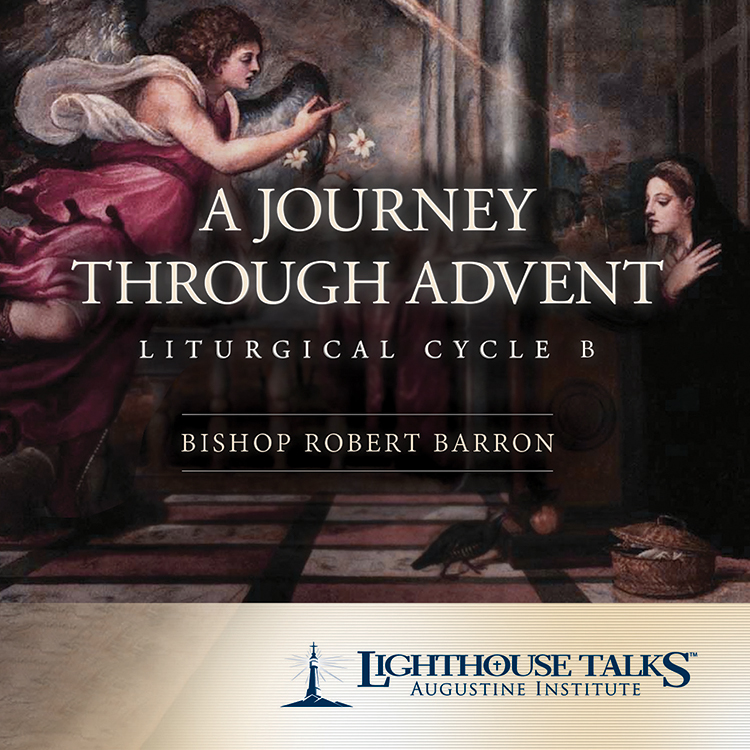
Journey Through Advent: Liturgical Cycle B
Prepare the way of the Lord!

Sunday, November 28, is the first day of Advent.  So, its time to find those purple and rose candles and begin to celebrate the season before the season.

Purple, rose, straw, wreath, reality check, one more thing, Rejoice!

What does Advent have in common with Lent?  The color purple.

Advent is considered a penitential season when we prepare for the coming of our Lord.  This is why the priests will wear purple vestments on three of the four Sundays and why three of the four candles on the wreath are purple.


I'm a guy.  I've never recognized the color, violet.  Nor the color, rose.  To me, there's purple and there's pink.

I remember, years ago, I would go to Church during Advent and say, "oh, they've got the purple and pink candles out."  And my wife or some other woman would correct me and say, "violet and rose!" But now, its cool to say purple.  But apparently, its still wrong to say, pink.


Advent is a penitential season.  Therefore, we do our best to do good deeds during Lent, errrr, Advent. So, my wife buys straw and makes a manger.  We try to fill the manger with straw before Christmas in order to provide a nice soft bed for the Baby Jesus.  When the kids were young, this helped prevent any of them getting chunks of coal in their stockings on Christmas morning.

Along with Advent wreathes, I'd like to plug a good cause, Wreathes across America.

Advent wreathes are wreathes, which we make ourselves from pine branches intertwined.  We get those from our Christmas tree which we trim.  Then, we lay it down in a central place and each Sunday, light the appropriate Advent Candle and sing songs and say prayers.  This is also when we fill the manger with straw.
Reality check.  Folks, our devotions were really hit and miss.  We did our best to keep up with them, but with young children, homeschooling, extended family and other demands, we frequently found ourselves doing these things the following Monday, even on occasion, the following Saturday.  And of course, forgetting altogether.  So, don't feel bad if you can't do them.

The main thing is to prepare your heart for the coming of Christ.

One more thing.  During Advent, we looked outward towards those in need.  We found charities and other good causes which helped us to forget our selfish wants and identify those that need the things we take for granted.

The Catholic Church provides many avenues for you to exercise your love and charity for your fellow man.  Food and clothes drives are frequently organized.  As well as prayer vigils and other things.

And finally, Advent is a joyful season.  Love is coming into our hearts and is already here.  Rejoice!


For more Quick Takes, visit This ain't the Lyceum

Friday, November 14, 2014

7QT's on Fellowship


Fellowship


Protestants restrict fellowship to the interaction of living Christians.  Therefore, they go to their assemblies to fellowship with other Christians and to pray for them.  But Scripture tells us that when we become Christians, when we are baptized, we fellowship with the saints and angels which are in heaven.  Let's go over the Scripture in detail.  Turn to Hebrews 12:18-24.  I'm using the King James Version (KJV).  We begin where St. Paul describes the Old Testament.

The Face of God

 He says:


18 For ye are not come unto the mount that might be touched, and that burned with fire, nor unto blackness, and darkness, and tempest,
He is distinguishing the Old Testament from the New.  And the Old seems a very impersonal and scary relationship with God compared to the New.  What St. Paul is describing here is described originally explained in the book of Exodus:
Exodus 19:11-13 
King James Version (KJV)
11 And be ready against the third day: for the third day the Lord will come down in the sight of all the people upon mount Sinai.  12 And thou shalt set bounds unto the people round about, saying, Take heed to yourselves, that ye go not up into the mount, or touch the border of it: whosoever toucheth the mount shall be surely put to death:  13 There shall not an hand touch it, but he shall surely be stoned, or shot through; whether it be beast or man, it shall not live: when the trumpet soundeth long, they shall come up to the mount.
So, it is a clear distinction.  The Hebrew people literally "feared" the Lord.
19 And the sound of a trumpet, and the voice of words; which voice they that heard intreated that the word should not be spoken to them any more:
The Hebrew people feared the Lord so much that they begged Him no longer to speak directly to them but to speak to them through Moses:
Exodus 20:19 And they said unto Moses, Speak thou with us, and we will hear: but let not God speak with us, lest we die.
20 (For they could not endure that which was commanded, And if so much as a beast touch the mountain, it shall be stoned, or thrust through with a dart:
Even if an animal should touch God's abode, he should die.
21 And so terrible was the sight, that Moses said, I exceedingly fear and quake:)
Most astounding of all, Moses, whom God called His friend, also confessed great fear.
22 But ye are come unto mount Sion, and unto the city of the living God, the heavenly Jerusalem, and to an innumerable company of angels,
But it is totally different in the New Testament.  When we are baptized, we enter the City of God, which is the Church.  And in it we mingle with the angels.
23 To the general assembly and church of the firstborn, which are written in heaven, and to God the Judge of all, and to the spirits of just men made perfect,
The general assembly is the Mass and those who participate in the Mass are the Church.  But the Church of the first born is the company of Saints whose names are written in heaven.  That means we are in the company of St. Mary the Mother of God, St. Joseph her spouse, Sts. Peter, James the greater, John, Andrew, Philip, Bartholomew, Jude the brother of James, Simon, James the less, Matthew, Mark, Luke, the early church fathers, the canonized saints etc. etc.
We are in company with them! 
24 And to Jesus the mediator of the new covenant, and to the blood of sprinkling, that speaketh better things than that of Abel.
And we are in the company of our Lord!
This is the fellowship to which you have come when you become a Catholic.  This is why we are permitted to pray to and with the Saints who have come before us. Because we already commune with the Saints.  Just as your neighbor will pray for you, so will your brother in Christ who is already on Mount Sion with Christ.
For more Quick Takes, visit Conversion Diary!